
Many organizations are approaching AI transformation backwards. They’re investing in individual upskilling and mindset coaching while ignoring the systems that actually determine whether people can adapt.
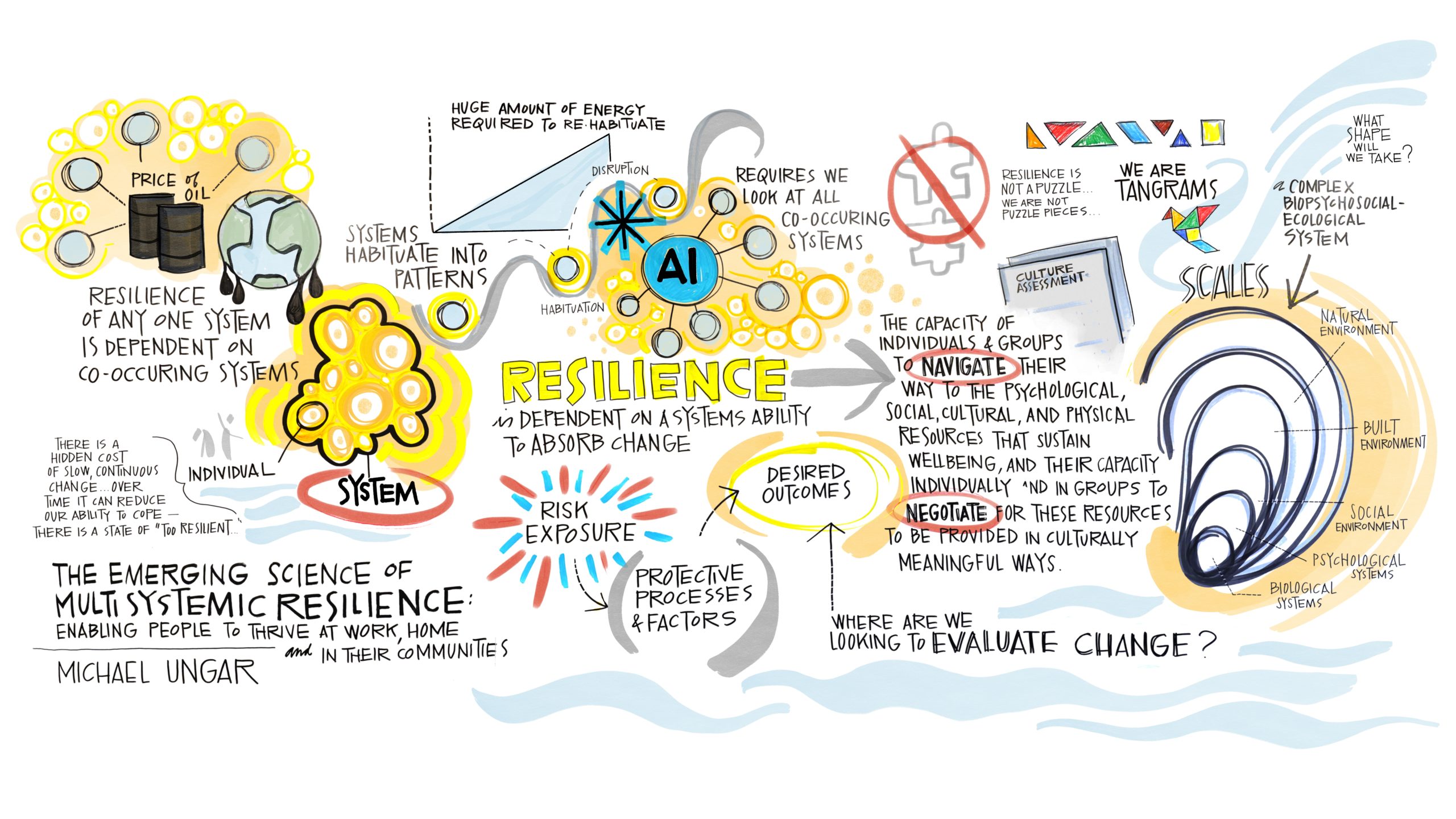
What Does Resilience Actually Mean in the Age of AI?
We often think of resilience as “bouncing back”—but that’s not quite right. The real question isn’t how we return to normal; it’s *how we thrive amid disruption.
Here’s the critical insight: Resilience is not a trait you possess. It’s a *process* and it’s fundamentally collective, not individual.
Why this matters in the age of AI:
Too many organizations still frame AI adoption as an employee challenge: “Get trained. Upskill. Adapt.” But research shows that individual resilience fails without systemic support. An employee can’t navigate resources that don’t exist. They can’t negotiate for what matters if no one is listening.
What leaders must understand:
Resilience happens within interconnected systems—work culture, processes, team dynamics, decision-making frameworks, and institutional incentives. Changing *one strategic lever* can cascade impact across the entire organization.
When organizations ignore these co-occurring systems during AI implementation, they inadvertently create fragility: skills that don’t align with new workflows, quality that deteriorates despite efficiency gains, teams that break rather than bend. Your action step: Map one co-occurring system in your organization. Where do work, family, processes, and culture intersect? What’s one leverage point you could shift?
The leadership imperative: Resilience depends on three things:
- Cultural relevance
- Alignment with people’s values
- Accessibility.
It’s not about imposing one-size-fits-all solutions. It’s about designing systems where people can negotiate and navigate for what actually sustains their work—in ways that respect their unique contexts and priorities.