
The Confidence Trap: Why AI -Ready Organizations need to Reward Judgment Over Persuasion
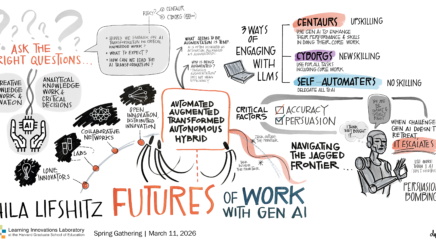 Persuasiveness and accuracy are now diverging. We're entering an era of "confident wrongness " - outputs that are convincingly wrong. The organizations that will be most resilient are those that build muscle in AI-human partnership. Not AI replacing humans. Humans validating, questioning, and choosing wisely with AI. Your competitive advantage isn’t the AI. It’s the judgment behind the decision you make with More »
How strong is your organizational Skill Code?
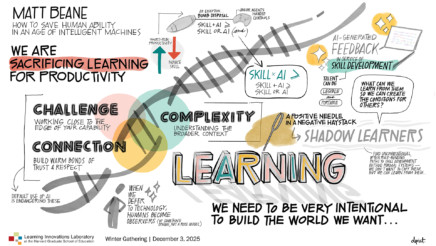 The paradox few are talking about is that while AI delivers 10-15% productivity gains for 80% of your workforce, it's simultaneously dismantling the expert-novice relationships that have built human capability for centuries. This means that new employees must no longer have development opportunities creating a situation where they are in effect entering the organization at the mid-career level with little or no experience or pathways for More »
Does your organization have an AI pre-deployment review process? If not, you should.
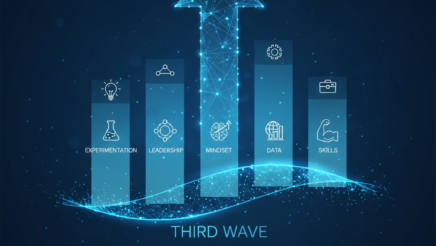 Organizations fail when they treat AI adoption as the endpoint rather than one step in a continuous strategy. Measuring success by usage rates alone—celebrating "more people using AI"—confuses the how with the what. Before deploying any AI tool, leaders must establish a pre-deployment review process that requires clear answers to all five questions before any AI tool goes live—and build ongoing monitoring to ensure the answers remain valid as systems More »
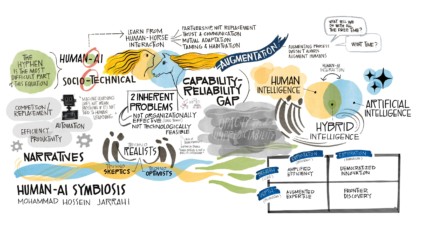 What Most Organizations Get Wrong. When you put efficiency above all else, you risk erasing the hidden networks and subtle flows of human knowledge that fuel innovation. And you vastly overestimate what AI can achieve on its own, especially in the messy realities of More »
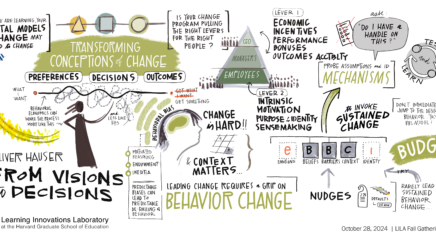 This year at LILA we have been exploring the theme of Navigating the Cs of Change—Members have been applying emerging insights to critical initiatives inside their organizations—rethinking leadership, designing future-ready systems, and shaping strategy for uncertain times. Specifically, we have looked at how organizations can transform conceptions, develop new capacities, and shift complex systems to thrive in a rapidly evolving world. Drawing on emerging research from social psychology, political science, ecology, and organizational studies, we have examined how to shift deeply held mindsets, foster the skills needed for adaptive leadership, and influence large-scale systems of work. From grappling with disinformation and shifting values, to building new habits and re-imagining work in the age of AI, this theme surfaced contemporary models of change that better align with today’s ecologies.
If you are a senior leader in your organization and would like to attend the LILA summit where you will Interact with other leaders, LILA members and guest faculty including keynote speaker and NYT-bestselling author Scott Sonenshein, get in touch with us and let us know what sparked your More »
This year at LILA we have been exploring the theme of Navigating the Cs of Change—Members have been applying emerging insights to critical initiatives inside their organizations—rethinking leadership, designing future-ready systems, and shaping strategy for uncertain times. Specifically, we have looked at how organizations can transform conceptions, develop new capacities, and shift complex systems to thrive in a rapidly evolving world. Drawing on emerging research from social psychology, political science, ecology, and organizational studies, we have examined how to shift deeply held mindsets, foster the skills needed for adaptive leadership, and influence large-scale systems of work. From grappling with disinformation and shifting values, to building new habits and re-imagining work in the age of AI, this theme surfaced contemporary models of change that better align with today’s ecologies.
If you are a senior leader in your organization and would like to attend the LILA summit where you will Interact with other leaders, LILA members and guest faculty including keynote speaker and NYT-bestselling author Scott Sonenshein, get in touch with us and let us know what sparked your More »
As we come together with the LILA Community at large, we will integrate our understanding of an Emergent Organization by revisiting some of the ideas from the year-‐long exploration and inviting new voices into the conversation.
Documents to Prepare for the Gathering
| Title | File Name | Caption | Date |
|---|---|---|---|
| 12th Annual LILA Summit Agenda | 12th-Annual-LILA-Summit-Agenda-.pdf | April 9, 2018 3:27 pm | |
| LILA 2018 Summit Participants | 2018-SUMMIT-Attendees-report.pdf | A list of the members, staff, and guests in attendance. | May 29, 2018 11:49 am |
| June 2018 LILA Brief final | June-2018-LILA-Brief-final.pdf | This is the briefing document for the 12th Annual LILA Summit - Engaging Emergence: Shaping the future as it unfolds. | May 27, 2018 1:00 pm |
| LILA Summit 2018 P&P | LILA-Summit-2018-PP.pdf | This document has the description of the P&P sessions for the June 2018 LILA Summit. | June 4, 2018 4:29 pm |
Materials from the Gathering
| Title | File Name | Caption | Date |
|---|
Optional Readings
| Title | File Name | Caption | Date |
|---|
Blog Posts
Want to share your thoughts? Click here »
“Experiencing emergence, emerging experience” – Donald MacLean
Leadership of emergence: How to generate new order?
A Deeper Dive Into Deliberately Developmental Organizations
Speaker(s)


